


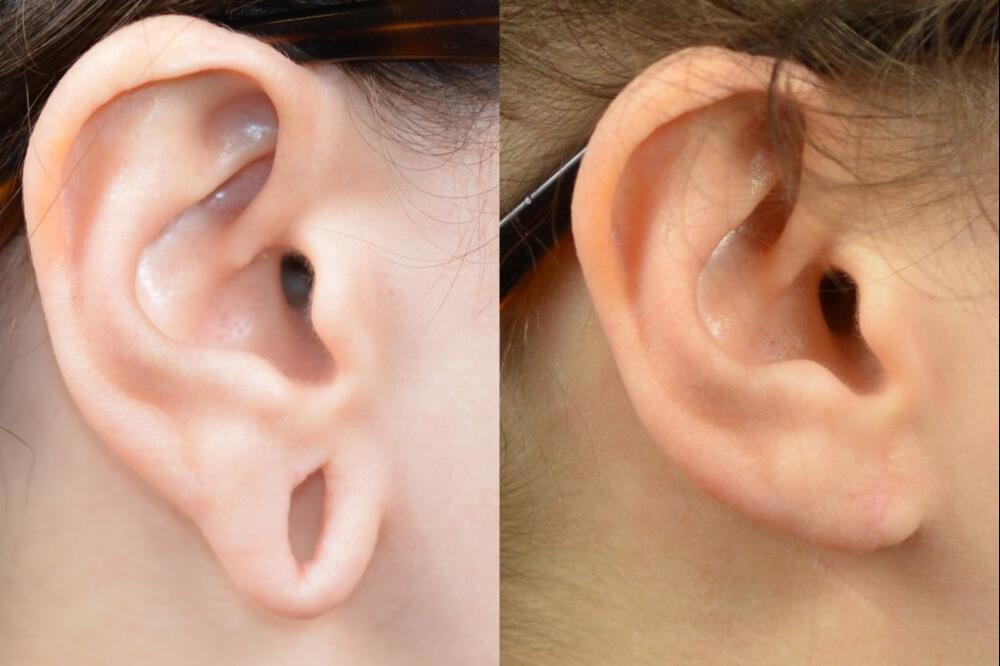
Ear Reconstruction Surgery
Ear defects can occur due to different reasons such as:
- Trauma
- Cancer ablation
- Prominent ears
- Congenital hypoplasia (microtia)
Incomplete embrynonic development is the main cause for microtia. It is a congenital defect that affect the ear. The severity of the issue can vary accordingly. There are different reconstruction surgeries and procedures for these kinds of birth defect. The three main ear reconstruction methods are:
- Otoplasty
- Microtia Repair
- Ear defect
Treating microtia
is comparatively
a difficult
task. It
involves a
multi-faceted
approach. The
surgeon will
first thoroughly
go through and
understand the
condition.
The first step
of the surgery
is to make an
incision just
behind the ear.
This is the
place where the
ear get joined
to the head.
Required amount
of cartilage and
skin will be
removed. Surgeon
will take out
cartilage from
chest, shape it
and then place
it at the site.
Second stage
includes
elevation of
this framework.
Third stage
includes lobular
reconstruction.
Other Option
includes
prosthetic ear
or osteo
integrated ear
implant.
In Otoplasty the
surgeon will
trim the
cartilage in
order to give
the desired
shape. After
that, the
surgeon will pin
back the
cartilage with
permanent
sutures to
secure the
cartilage.
Sometimes, the
surgeon may not
remove any
cartilages and
instead, he/she
may use stitches
to hold the
cartilage
permanently in
the right
place.
The surgery will
be carried out
under
anesthesia. You
will experience
mild discomfort
after completing
the procedure.
Headbands are
recommended
sometimes in
order to hold
the ears in the
desired
position. Risks
are minimal for
ear
reconstruction
surgery. Scars
may be visible
behind ears even
after healing.
It is vital to
have proper
follow-up care
after the
surgery.
Anything unusual
should be
reported to the
doctor
immediately
after the
surgery.